Are luxury brands missing the revolution in the digital economy? According to the report of McKinsey, 80% of luxury sales are now influenced by online. This is a staggering figure, and clearly highlights the important role digital now plays within a luxury purchase. (Wedgbury L, 2020) Consequently, I will take Farfetch as an example to analyze how its digital business model drives it to be in the front of technology fashion. Farfetch, created to address the specific problem that many high-end boutique retailers do not have the ability or resources to effectively manage online stores, revolutionized the market by creating an online hub. It not only provides an e-commerce platform for online business for brands. It also gives them access to their technology stack, ensuring they can better manage digital complexity. (Tuneva, G. , 2020) Customers can find and purchase high-end luxury products from various brands and designers in the hub. After the products are sold, Farfetch charges a sales commission.
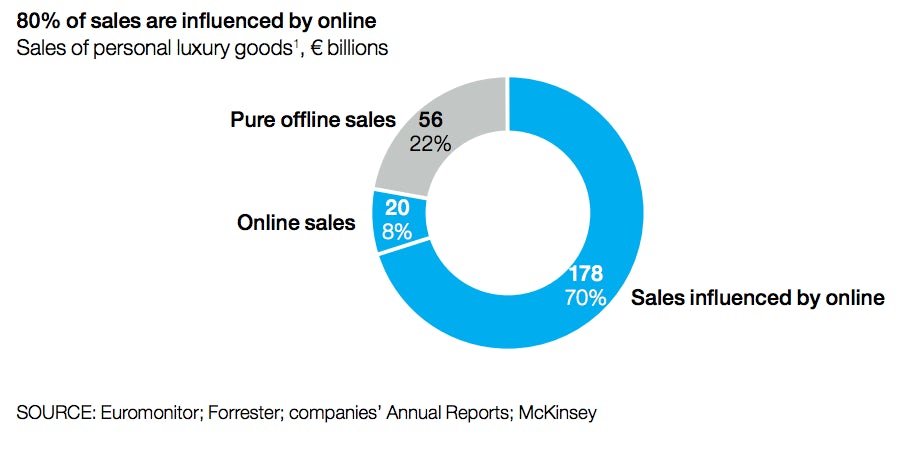
Figure 1: 80% of sales are influenced by online
Therefore, as a global technology platform for luxury fashion, Farfetch is positioned as a technology company. I define its digital model as technology oriented retail business model. I will analyze the contribution of digital business model to the success of Farfetch from three aspects: management model, target customer growth, loyalty and future market.
Management model
Farfetch’s management model is a technology-driven model. Bringing high end fashion online through technology, which does not rely on owning inventory. They platformized the supply chain and created a new business model around high profits and rapid turnaround, thus changing the retail fashion model in the process. (The Business of Fashion, 2020) Compared with the traditional decentralized and rapid luxury retail pattern, Farfetch is more like a market. Through establishing partnership with independent retailers, Farfetch directly delivers goods to most major cities in the world, so it does not need to store like a retailer. In this age of Amazon, which requires the creation of an omnichannel shopping experience, Farfetch has not integrated its Internet strategy into a mature retail business. Instead, it originated in the technology world and virtually attracted about 2 million global luxury shoppers through its digital means to support the daily operations and sales challenges of physical retailers. (Danziger P, 2020) “We are not a retailer. We are here to help brands and retailers find what the luxury experience is of 2020 and beyond. We want to be the platform for the global fashion industry, ” said Farfetch CEO and founder José Neves in an interview with Fast Company. (Finningley J, 2020)
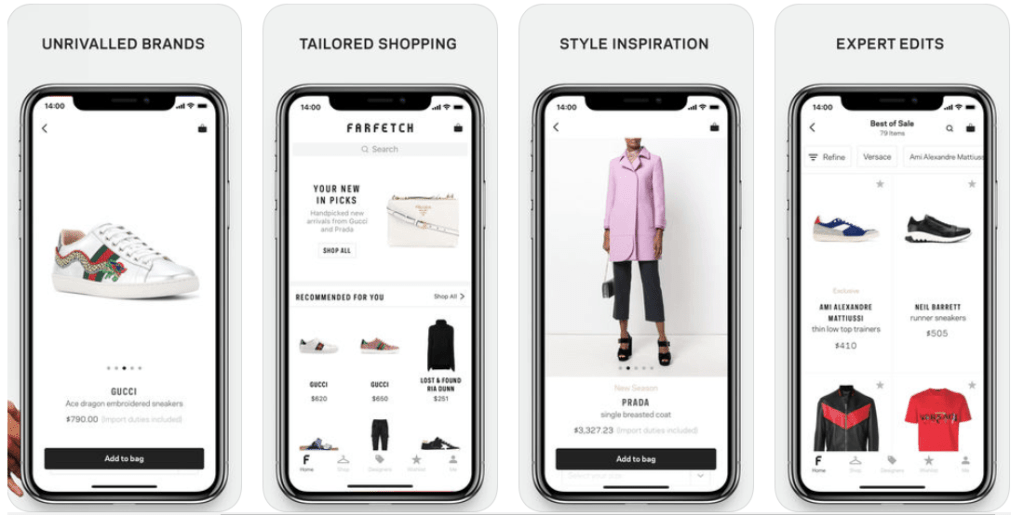
Figure 2: Farfetch’s Use interface (Tuneva G, 2020)
Target customer growth and loyalty
Farfetch’s mature use of the SMAC model to conduct market surveys of target customers found that millennials have a “digital first” way of thinking, and they are more willing to spend between GenZ on online spending capabilities accounting for 85% of the growth in luxury fashion sales in 2017. By 2025, millennials will surpass GenX and become the largest consumer group in the luxury sector. (Finningley, J., 2020) But from my cognitive perspective, the assumption that luxury shoppers will always love a tactile shopping experience with personalized customer service (to get the full value of money) has been challenged. Although the reason why digital luxury is increasingly important is mainly passed down from generation to generation, it is not only related to millennials, almost all luxury shoppers are keen to embrace the digital lifestyle. (Figure 3) Therefore, under the guidance of digital business model, Farfetch has greatly improved the number and quality of customers. For new customers, Farfetch’s service promise is exemplary, promising fast shipping, response time, 24/7 support, and free returns. The exclusivity of Farfetch products is another way to maintain customer loyalty, and 98% of retailers that partner with Farfetch have exclusive relationships with the brand. This ensures that products that shoppers see on Farfetch are unlikely to appear elsewhere on the web. (Digital.hbs.edu, 2020) As a result, Farfetch ensures that in-store one-to-one experiences are replicated and delivered online as much as possible.
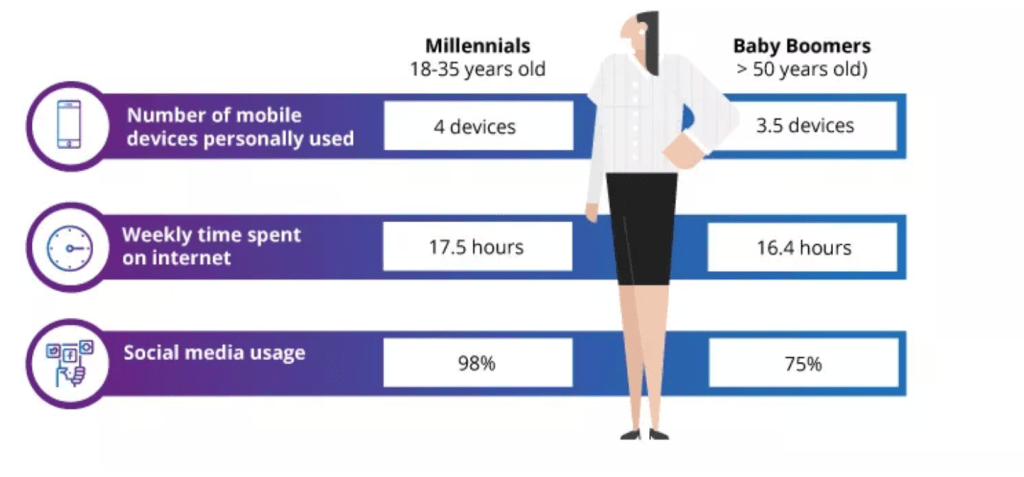
Figure 3: Proportion of luxury shoppers (Business!, Z., 2020)
The development of future market
At the same time, the digital business model is also predicting its future market development trends. First, clothing, accessories and handbags dominate the resale market, with 68% of women already or willing to buy from the secondary market. As a result, Farfetch recently launched SecondLife. In addition, Farfetch is entering the Chinese market. The partnership between Farfetch and JD.com has not only enabled it to acquire the domestic proprietary technology of China ’s second largest e-commerce platform, but also allowed it to collaborate with China ’s top social media Tencent, the owner of the platform WeChat, established a connection, which gave Farfetch a huge lead in the Chinese market. (E Tail Boston 2020, 2020)
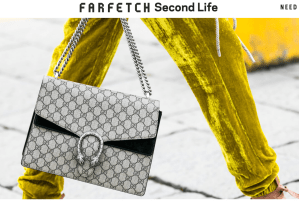
Figure 3: Farfetch SecondLife (website, 2020)
Works cited
Business!, Z. (2020). Digital Transformation Success Cases in Luxury Retail – Innovation Blog. [online] ZIGURAT Innovation School – Transform the way you do business!. Available at: https://www.e-zigurat.com/innovation-school/blog/digital-transformation-success-cases-in-luxury-retail/ [Accessed 6 Mar. 2020].
Danziger, P. (2020). Digital Luxury Fashion Marketplace Farfetch Is On A Roll To An IPO. [online] Forbes. Available at: https://www.forbes.com/sites/pamdanziger/2018/03/20/digital-luxury-fashion-marketplace-Farfetch-is-on-a-roll-to-an-ipo/ [Accessed 5 Mar. 2020].
Digital.hbs.edu. (2020). Farfetch.com: an E-commerce platform valued at $1 billion that is helping boutiques “globalizing” local shopping – Digital Innovation and Transformation. [online] Available at: https://digital.hbs.edu/platform-digit/submission/Farfetch-com-an-e-commerce-platform-valued-at-1-billion-that-is-helping-boutiques-globalizing-local-shopping/ [Accessed 5 Mar. 2020].
eTail Boston 2020. (2020). How Farfetch is Leveraging WeChat to Crack China’s Online Market. [online] Available at: https://etaileast.wbresearch.com/Farfetch-expanding-partnership-strategy-with-jd-leveraging-wechat-to-crack-china-online-market-ty-u [Accessed 5 Mar. 2020].
Finningley, J. (2020). Business Model Canvas – Farfetch. [online] Lumosbusiness.com. Available at: http://lumosbusiness.com/business-model-canvas-Farfetch/ [Accessed 5 Mar. 2020].
The Business of Fashion. (2020). Is fashion missing the technology revolution?. [online] Available at: https://www.businessoffashion.com/community/voices/discussions/is-fashion-missing-the-technology-revolution [Accessed 5 Mar. 2020].
Tuneva, G. (2020). How Farfetch used technology to bring high-end fashion online. [online] Essential Retail. Available at: https://www.essentialretail.com/comments/Farfetch-used-technology-fashion/ [Accessed 5 Mar. 2020].
Wedgbury, L. (2020). Why luxury brands need digital transformation – Econsultancy. [online] Econsultancy. Available at: https://econsultancy.com/digital-transformation-for-luxury/ [Accessed 5 Mar. 2020].
 Nico's QQ space
As a fashion enthusiast myself, I found it very accurate that the fashion retail industry is shifting towards e-commerce business models. More and more of my purchases are made from online such as Farfetch and Ssense. The benefits that e-commerce platforms offer us is gradually greater than an in-store shopping experience. Despite not being able to feel the product beforehand or having to enjoy the store atmosphere, I consider accessibility to be the top driving factor for many of us to shop online. A few clicks on our tablets and everything is sorted.
From my humble experience, digital business models, particularly P2P models (or market platforms) have opened up numerous opportunities in the fashion industry. Businesses that failed to cope with the on-going trend by altering their business model are likely to fail, and one example is Barneys. Barneys used to be a leading American luxury department store brand New York City, however with less instore traffic and skyrocketing rent. The company did not make changes and adapt to the changing environment, which destined to bankruptcy in August 2019.
Regarding the future of the trend of the luxury sector, I strongly agree that merging into China markets would be one of the most profitable sources of revenue generation. The demand for fashion is intensive in China, and the purchasing power of Chinese consumers is high.
赞Liked by 1 person
Thanks Michael for the comment. The business model of P2P does provide a lot of development opportunities for the fashion industry. Of course, Farfetch also benefits. But I think Farfetch is different from other fashion industries. For example, the business model of Net-A-Porter is more P2P-based. It is a pure e-commerce retailer. It controls the entire value chain, from customers Relationships, product inventory and implementation, and digital representation of the brand. Farfetch sees itself as a technology company, not an electronics retailer. The above is my point, thanks again for sharing.
赞赞
Hi Nico, great read!
Importantly do you think by adopting a digital business model and expanding into the mass market, high-end brands risk weakening their exclusivity and luxury status? It seems in line with the law of supply and demand, by appearing too accessible brands may lose their appeal? Previously perceived as ‘scarce’ and ‘out of reach’, luxury brands like Louis Vuitton have fought hard to preserve this e.g. fighting to make their bags harder to ‘copy’ or ‘fake’ as weakens their brand image (Yeoman, 2011).
Additionally, technological advances have allowed an evolution in luxury consumption -‘rentals’. Future Foundation (2010) found nearly 25% of 15-24-year olds and over 20% of 25-34-year olds held favourable attitudes towards hiring luxury items, and websites offering ‘rentals’ are now ubiquitous e.g. www/bagborroworsteal.com offering designer handbags. Moreover, data tracking by Future Foundation (2010) found that with growing eco-sensitivity these attitudes could impact on hedonistic luxury indulgences. Therefore, seeing how growing social awareness has led luxury brands to align with eco-awareness and ethical consumption, do you think despite increased accessibility, that demand will decrease?
References
Future Foundation. (2010). Consuming Luxury. Retrieved March 09, 2020 from http://www.futurefoundation.net
Yeoman, I. (2011). The changing behaviours of luxury consumption. Journal of Revenue and Pricing Management, 10(1), 47–50. https://doi.org/10.1057/rpm.2010.43
赞Liked by 1 person
Thank you for your reply! I am honored to answer your question. Regarding the first question, my answer is that the appeal and status of high-end brands will not decline. The digital business model is an inevitable trend that conforms to the trend of the times. From the perspective of consumers, such as millennials with huge consumption potential, and consumers in remote areas who must purchase luxury goods through online shopping. And from my point of view, the “scarcity” of luxury goods is not just expressed in quantity. Digital business models also bring some unique values to luxury goods, such as the cooperation between brands and e-commerce platforms to launch joint models. However, there are still many problems about the e-commerce market, such as counterfeit and fake goods you mentioned, and logistics costs.
Regarding the second question, I thought carefully. To be honest, it is really difficult to predict the impact of consumer attitudes on market demand. Market demand is always there. Consumers are more inclined to rent luxury goods or still have demand for them, but they do not buy directly. In many areas, we uphold the concept of use and ownership. It doesn’t affect luxury, but it does. Therefore, Far from being a threat to big-name brands, the rental model may be leveraged as a very effective customer recruitment channel.
赞Liked by 1 person
no worries! I do completely agree that ‘scarcity’ alone does not predict consumer need for luxury goods especially! Also thank you for mentioning coopertation as I hadn’t thought about this at all! Thank you for answering I found your thoughts really interesting especially the rental model also.
赞赞
Thanks NICO’s blog for sharing. As a person who does n’t know about luxury online shopping, I used to only consider physical store purchases, because it allows me to personally contact and consider products. Through Nico’s article, I learned about Farfetch. I particularly agree with Nico that the speculation that luxury buyers like personalized customer service has been challenged. Because of technological innovation and economic globalization, more people like to buy the goods they want at home. This is the successful application of e-commerce. I think e-commerce is becoming more and more important in the future development, and I am looking forward to Farefetch entry into the Chinese market and its impact. I will consider using Farefetch for future shopping.
赞赞
I am very grateful to Nico for sharing the digital business model of farfetch. I have always been accustomed to browsing this website, but I am still not used to buying luxury goods or high-end brands online because I personally enjoy the services I get when buying luxury goods. But after reading your article, I feel better about this platform, because you said that they are trying to make the platform’s services as high-end as possible: such as one-to-one customer service, very fast delivery and after-sales processing, customers service. I think this is also one of the reasons why customers feel that it is worth spending luxury online. Compared with offline purchase, online purchase is more convenient and faster. This may be one of the secrets of high-end online shopping website success.
赞赞
Thanks Nico for sharing her research in Farfetch. I personally look forward to and excited about Farfetch’s entry into the Chinese market and its cooperation with Tencent. In China, the luxury retail we have contacted is priced much higher than the capitalist market because of tariffs. On the other hand, it also shows that Farfetch not only successfully used the digital business model to occupy the luxury retail market, it also uses such a model, to a certain extent, to open trade barriers. I am optimistic about the development of Farfetch in China, firstly because of the amazing purchasing power of Chinese women in luxury goods, and secondly, Farfetch enables more young people to understand the trend of fashion trends, which may be beneficial for China to develop its own luxury Decoration brand
Thanks
赞赞
Reading through the article, comments and replies again, there is a question which impresses me a lot, whether “adopting a digital business model and expanding into the mass market, high-end brands risk weakening their exclusivity and luxury status?”. The answer to this question must be critical. To customers, a digital model for a luxury brand must be more convenient for them, because online shopping shortens the distance between them and products. However, for the brand itself, its luxury is precisely reflected in its rareness, and the digital model transforms customers psychologically, making them feel like they can easily get the limited products. Besides, in regard to my previous comment, I think it is exciting that Farfetch is marching into the Chinese market. Fakes and illegal copies in the Chinese market will definitely affect the reputation of some luxury brands. The method from Farfetch to solve this problem is what I am waiting for.
赞赞