Description: What happened?
BEMM129 Digital Business module is a course that uses FutureLearn MOOC and ELE to conduct online learning expertise and participate in discussion of questions, and uses blog writing on different topics and peer review as evaluation criteria. It is unique because its main form is online teaching and interactions through the media to generate peers. Therefore, I will perform detailed evidence-based reflection in this blog, and summarize it through video.
Figure 1: My learning process
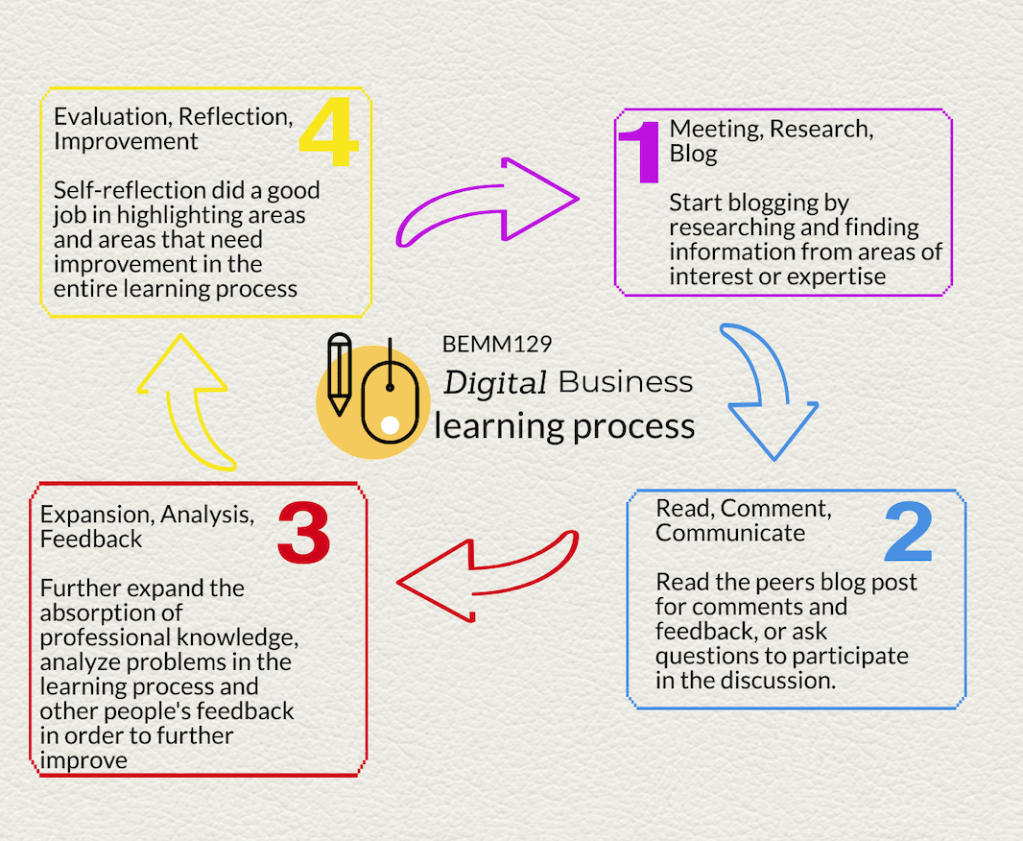
Created by Jin Wu 2020, using Piktochart
Evaluation: What are you thoughts and feelings & What went well and what did not?
At the beginning, I was looking forward to this module and a bit worried because before that I was used to writing essays and reports and offline lecture and workshop. For me, this is a completely different learning module. It has a flexible learning mechanism. I realize that self-discipline and initiative are essential. This is exactly what I lack, so how to manage time properly is an obstacle. But once I started blogging in an area I loved, I was greatly satisfied. Especially in the process of researching and finding information, I once again recognized things from the perspective of digital commerce. For example, when discussing the smart city example on ELE, I can interpret Bristol’s intelligence from a digital and technological perspective. (Lisa Harris, 2020)
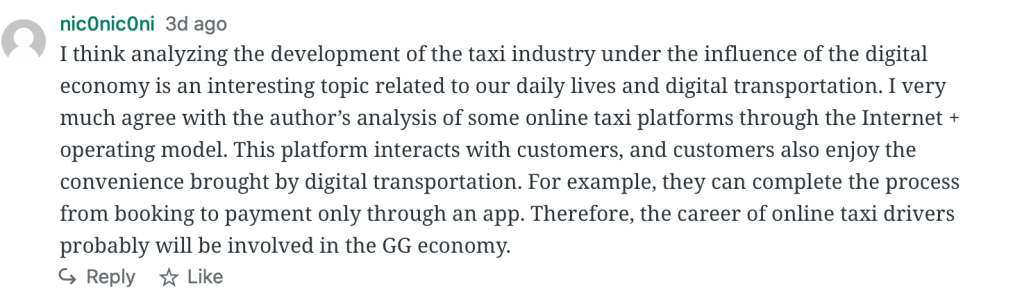
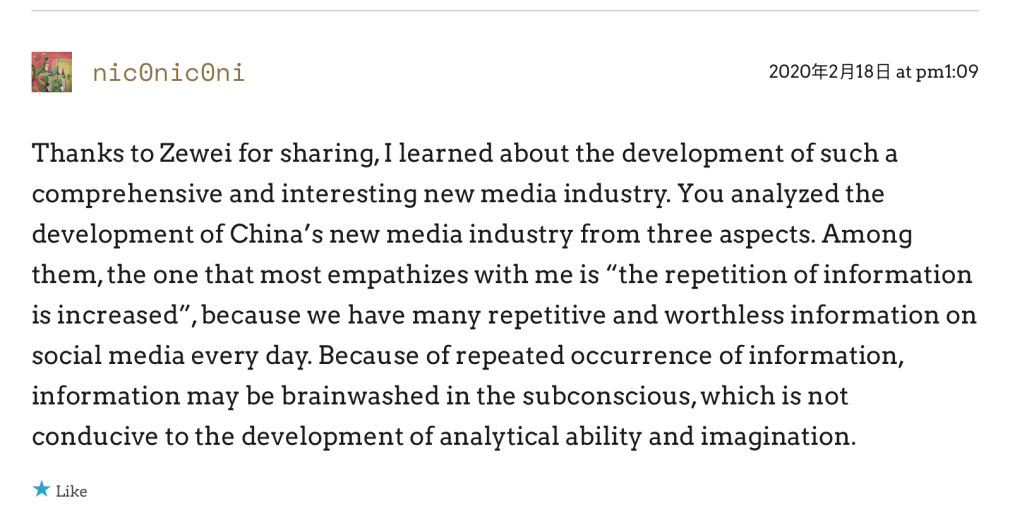
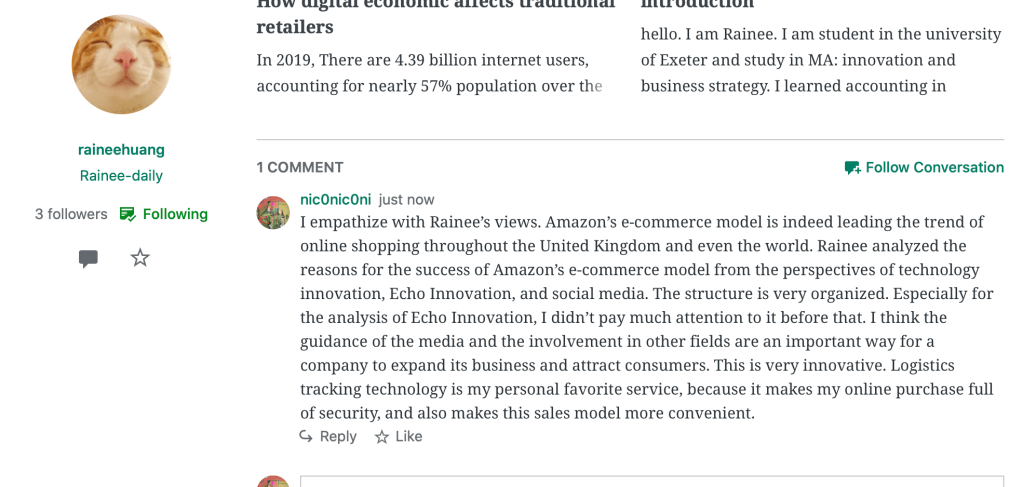
In addition, studying at FutureLearn MOOC gives me more possibilities for future studies and careers. This is a learning platform that brings together different backgrounds and identities, so diversified thinking has greatly expanded my thinking and I will always use the concept of lifelong learning as an incentive for future growth. Comments from peers on the blog also played an important role. For example, I discussed with Claudia in the second blog “Farfetch: A model for success through digital business models in Luxury Retail” whether the popularity of electronic business models will weaken the exclusiveness and commercial status of the luxury industry and the impact of electronics on luxury Changes in the product leasing market. The questions raised by Claudia in the comments extended my idea. Because the people who comment on my blog are mostly interested in blog content and may come from different fields, the questions they ask can to a certain extent bring me different levels of thinking direction and innovation inspiration. Different learning methods have made me experience the convenience and flexibility of digital learning, and the openness of online resource sharing and collaboration, which will also open the first door of the digital world for my future social network and digital employment environment. However, I think I lack the initiative in participating in the discussion and always forget to reply after thinking.
Figure 2&3&4: Detailed evidence on participation in MOOC, ELE and Blog comments
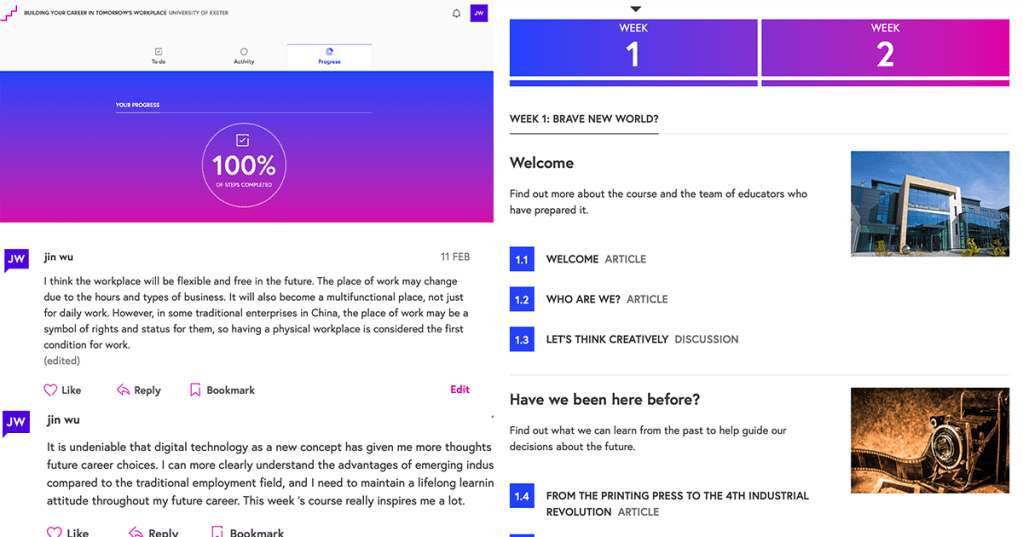
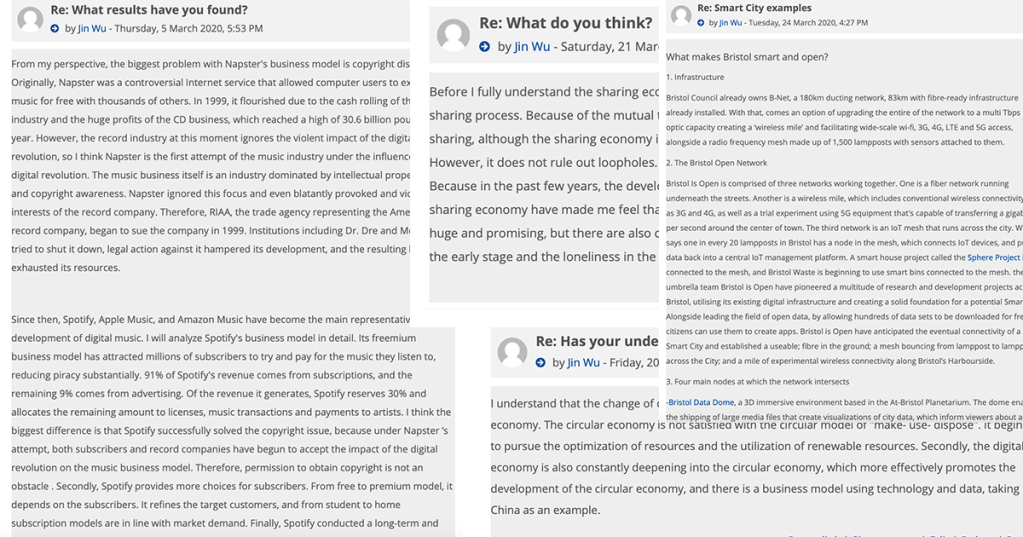
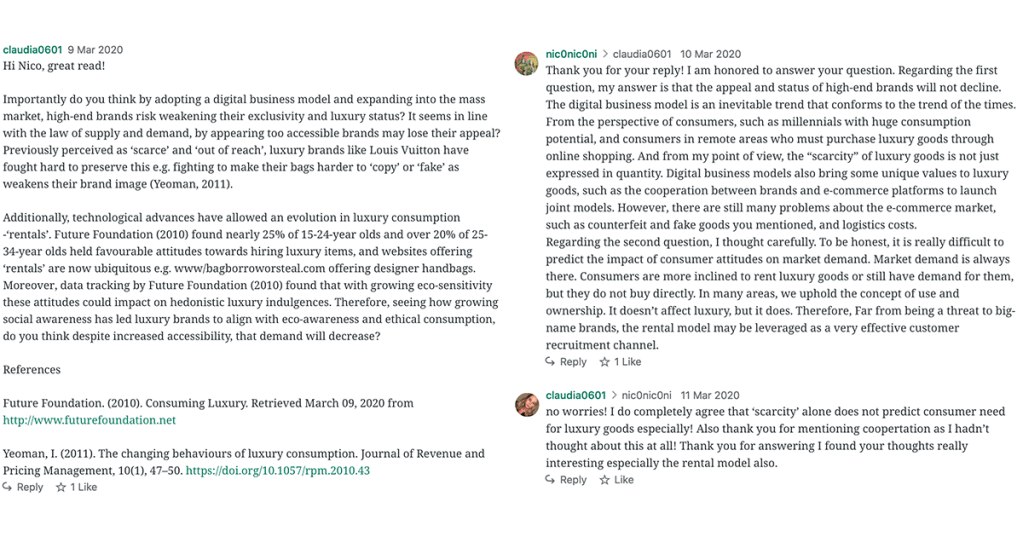
Created by Jin Wu 2020, using Photoshop
Figure 5:Changes in the cognitive process of digital business model
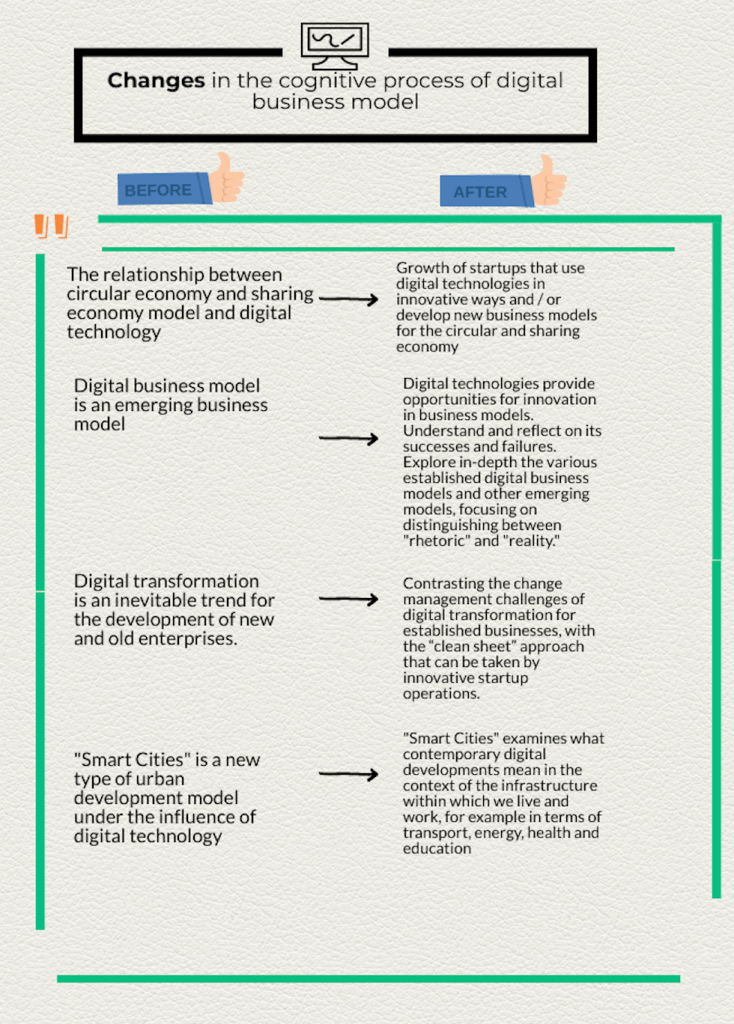
Created by Jin Wu 2020, using Piktochart
Action Plan: What would you do next time?
Figure 6 – Video showing Action Plan. Made Jin Wu 2020 using Biteable.com
Word count: 412
Works cited
Farfetch: A model for success through digital business models in Luxury Retail. [online] Available at: https://wordpress.com/read/feeds/102975445/posts/2614122410 [Accessed 30 Mar. 2020].
Lisa Harris. (2020) What makes a city “smart”? Available at: ELE (BEMM129) Digital Busines, Week 9 SMART CITIES (9/3) https://vle.exeter.ac.uk/mod/forum/view.php?id=1022685&forceview=1[Accessed 30 Mar. 2020].
Attachment: My comments
https://wordpress.com/read/blogs/172017043/posts/23

https://wordpress.com/read/feeds/103121908/posts/2614624449
 Nico's QQ space